Professional 3D Visualization
Bringing ideas to life through stunning 3D visuals that captivate, communicate, and elevate your brand’s vision
Why you need professional 3D Visualization
Expertise That Elevates Your Brand
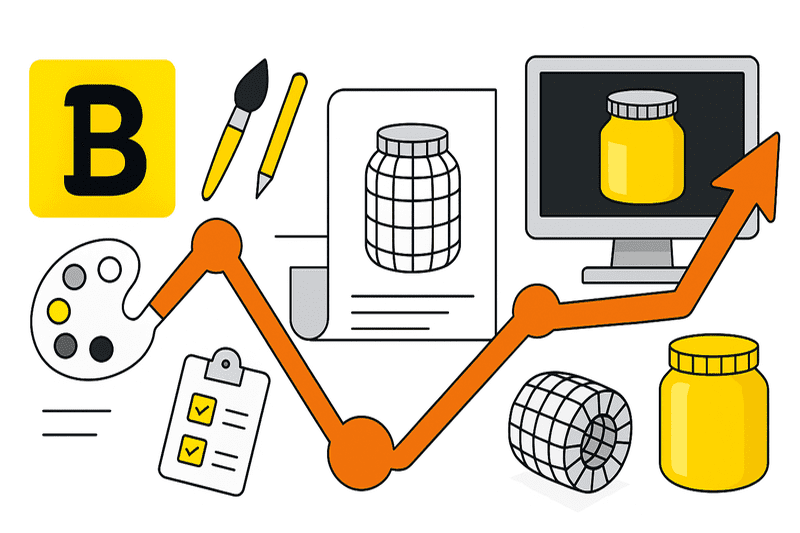
3D Visualization is the professional process of creating realistic digital representations of products, architecture, or concepts—used to enhance presentations, improve decision-making, and visually communicate ideas with clarity, precision, and high-impact detail.
Why Hire a 3D Visualization Professional
-
Delivers high-quality, photorealistic visual results
-
Accurately communicates complex concepts and designs
-
Enhances presentations, marketing, and client proposals
-
Reduces costly errors before physical production
-
Saves time with efficient modeling and rendering workflows
-
Ensures technical precision and visual consistency across formats
- Our Strategy
Plan with clarity
We define scope, deliverables, timeline, and approvals upfront—so the project stays organized, predictable, and efficient.
Build it right, not just “make it work”
We prioritize clean, modern, secure, and fast solutions. When an old site has too much technical debt, we may recommend a rebuild because it’s often safer and more cost-effective long term.
Support beyond launch.
You get structured previews, a post-launch stabilization period, and optional maintenance or on-demand support—so your site stays stable, updated, and protected.
- Frequently asked questions
We treat client files and information as confidential and use secure workflows to store and transfer files.
We do not share your project assets publicly without your permission. If you need an NDA-style approach, tell us upfront.
es—you will always receive the final deliverables required to use your project as intended (for print, web, or production). What “final files” means depends on the service and the agreed scope, but typically includes items such as:
-
- Print-ready files: PDF (press-ready), packaged assets, and production exports
-
- Web-ready files: optimized PNG/JPG/WebP, SVG icons (when applicable), and correctly sized variations
-
- 3D deliverables: exported models suitable for your use case (commonly STL / 3MF for printing, or OBJ / FBX / GLB/GLTF for rendering, web, or game/AR pipelines)
About source files (editable project files)
Source files are the editable working files used to create the final deliverables. These can include:
-
- Adobe source files: PSD (Photoshop), AI (Illustrator), INDD (InDesign)
-
- 3D source files: project files and scenes from professional 3D software such as Autodesk Maya and ZBrush, as well as other production formats when relevant
-
- Working assets: textures, HDRIs, reference boards, layered design files, node/shader setups (where applicable), and organized project folders
Because source files often contain:
-
- reusable base meshes or production tools,
-
- non-licensed assets or third-party components (when applicable),
-
- complex scene structure meant for studio workflows,
-
- and additional “behind-the-scenes” work that isn’t required for final delivery,
They are not always included by default.
How we handle source files professionally
To keep things transparent and fair:
-
- Final deliverables are always included in every project.
-
- Source files are available depending on the package you choose, or as an add-on if you need full editability in the future.
-
- If your project requires a clean handoff, we can provide a properly packaged source handover, which may include:
-
- organized folder structure,
-
- linked texture paths cleaned up,
-
- consolidated assets,
-
- exported interchange formats (FBX/OBJ/GLB) alongside the native scene files,
-
- and basic notes so another artist can continue work smoothly.
-
- If your project requires a clean handoff, we can provide a properly packaged source handover, which may include:
We will confirm exactly what file types you will receive before you pay, so there are no surprises.
If you tell me what kind of work this FAQ is for (graphic design, 3D printing models, animation, or product visualization), I can tailor the file list to match that service perfectly.
Yes. MGraficos can provide managed hosting designed for stability, security, and performance. We also support clients who prefer to host with a third-party provider—either way, we can still manage or support your site.
If you host with MGraficos, you get a “hands-off” experience where we handle the technical side. Based on our long-term operational tracking, our hosting environment typically delivers ~99%+ uptime across the year (availability can still be affected by upstream providers or events outside anyone’s control, but we design for reliability and fast recovery).
Managed hosting with MGraficos is ideal if you want:
-
A hands-off experience (we handle the technical side)
-
Better reliability and performance tuning
-
Clear accountability (one team responsible for the site working properly)
Domains and renewals (important and often overlooked)
Whether you work with MGraficos or a third-party provider, domains and hosting are recurring services and typically require annual renewal:
-
Domain registration renews yearly (or multi-year, depending on your preference)
-
Hosting plans renew annually or monthly (depending on the plan)
We can manage renewals for you or guide you if you prefer to self-manage—either way, we make sure you understand what renews, when, and why it matters.
Security-related costs can vary (and we’ll be transparent)
Security needs are not one-size-fits-all. A brochure site and an e-commerce or member portal site have very different risk levels. Depending on your needs, there may be additional costs for:
-
SSL certificates (standard SSL is often sufficient, but higher-assurance certificates can cost extra)
-
Malware scanning and monitoring
-
Hardening and higher-security configurations for sites handling payments, logins, or sensitive data
Our approach is practical: we recommend what’s appropriate for your risk level and clearly explain what’s optional vs. required.
Do you provide website maintenance or ongoing support?
Yes. MGraficos offers monthly maintenance and on-demand support. The key point is this: building a website and maintaining a website are two different services. A site can look great on launch day, but without ongoing care it can gradually become outdated, slower, or more vulnerable over time.
What’s included after launch? (limited stabilization period)
After launch, MGraficos typically includes a short stabilization period to close the project cleanly and ensure everything works as intended:
-
Bug fixes and minor adjustments found right after launch (items that may slip through QA) — typically 30–60 days
-
Small text/image edits within a reasonable limit while the project is being finalized
-
Basic guidance (login help, how to edit content, where things are located) — typically 30–60 days
This is designed to help you feel confident using your new site.
What happens after that?
Months later, most issues come from:
-
plugin/theme updates
-
hosting environment changes
-
new pages, features, or functionality requests
-
changes made by the client (new plugins, settings changes, builder edits)
-
third-party integrations changing behavior (payments, forms, email services, APIs)
Those situations require maintenance or support time and are not part of the original build once the post-launch period ends.
Ongoing support options
Monthly Maintenance Plan (recommended):
A fixed monthly plan can include:
-
WordPress/theme/plugin updates (scheduled and tested)
-
Regular backups + recovery planning
-
Uptime and security monitoring
-
Performance tuning (cache strategy, image optimization guidance, database housekeeping when appropriate)
-
A small monthly allowance for minor tasks (content edits, small fixes)
On-demand support (hourly or prepaid bundles):
If you don’t want a monthly plan, we can support you as needed:
-
Hourly work for updates, fixes, and improvements
-
Prepaid hour bundles for predictable budgeting
For both options, we keep it professional and simple: we confirm scope, estimate effort, and document changes.
We can do both—new builds and redesigns—and we’ll recommend the approach that delivers the best long-term value for your business.
What we can do
-
- New builds: from simple landing pages to full multi-page websites
-
- Redesigns: improvements to layout, branding, navigation, and structure
-
- Speed & performance cleanup: page speed, Core Web Vitals, image optimization, caching strategy, database cleanup (when appropriate)
-
- Content organization & conversion improvements: clearer messaging, better page flow, stronger calls-to-action, and improved user experience
A practical note about “redesign vs. rebuild” (and why it matters)
Many clients assume that “updating” an existing site is always cheaper than starting from scratch. In reality, that depends heavily on how the site was originally built and how current the code and plugins are.
In many cases, a modern rebuild can be the smarter option because:
-
- Legacy themes and outdated builders can limit what we can safely change without breaking layouts.
-
- Old plugin stacks often create performance and security issues, and cleaning them up can take more time than rebuilding cleanly.
-
- Custom code or heavily modified templates may not follow current best practices, which makes updates unpredictable and harder to maintain.
-
- Technical debt (years of quick fixes, unused plugins, messy styling, and inconsistent structure) can slow down every improvement you try to make.
-
- Modern standards (mobile-first UX, accessibility, performance metrics, SEO structure) are often easier to implement properly on a clean foundation.
That said, if your current site has a strong foundation—modern WordPress core, a maintained theme, clean structure, and a sensible plugin setup—then a redesign or optimization pass can be very cost-effective.
How we decide what’s best
We’ll review your current website and identify:
-
- the platform/build method (theme, builder, custom code)
-
- plugin health and update status
-
- performance bottlenecks
-
- SEO and structure issues
-
- , how much can be improved without risking stability
Then we’ll recommend the most efficient path: refresh, rebuild, or a hybrid approach (rebuild key pages while preserving what still works). The goal is always the same: a site that looks modern, loads fast, is secure, and is easy to maintain going forward.
We focus on repeatable, professional results:
-
- Proper slicing settings per material
-
- Fit/scale verification when needed
-
- Support strategy to protect visible surfaces
- Quality checks and cleanup
For complex prints, we can share a photo before final pickup/shipping.
We offer a wide range of materials—from everyday plastics to engineering-grade and industrial composites—so the best choice depends on strength, heat exposure, flexibility, surface finish, and the part’s real-world use. (Material availability can vary by color and supply.)
Everyday / General-Purpose Materials
-
- PLA (easy, great detail, prototypes, display parts)
-
- PETG (stronger and more heat-resistant than PLA; great for functional parts)
-
- PET (similar to PETG; used for durable functional prints)
Weather-Resistant / Durable Materials
-
- ABS (tough, impact-resistant; good for functional enclosures)
-
- ASA (similar to ABS, often preferred for outdoor UV/weather resistance)
Flexible Materials
-
- TPU (rubber-like flexibility for grips, gaskets, bumpers, protective parts)
-
- Includes options like TPU 95A and TPU 90A (different softness levels),
-
- TPU (rubber-like flexibility for grips, gaskets, bumpers, protective parts)
Engineering-Grade Materials
-
- PC (Polycarbonate) (high toughness and heat resistance for demanding parts)
-
- PA (Nylon family) (strong, wear-resistant; excellent for functional/mechanical parts)
Reinforced Composites (Carbon Fiber / Glass Fiber)
For parts that need extra stiffness, higher strength, and better thermal performance, we can print reinforced blends such as:
-
- PLA-CF (stiffer PLA with carbon fiber)
-
- PETG-CF (PETG reinforced with carbon fiber)
-
- PET-CF (tough PET blend reinforced with carbon fiber)
-
- PAHT-CF (nylon composite with carbon fiber; built for higher performance)
-
- PA6-CF (nylon 6 reinforced with carbon fiber; very stiff/strong in dry environments)
-
- PPA-CF (industrial-grade nylon composite; positioned as very high strength/stiffness)
-
- PPS-CF (industrial composite known for high heat/chemical resistance and flame-retardant properties)
-
- Some reinforced families also exist in GF (glass fiber) variants (commonly referenced alongside PA6- and PET-reinforced lines).
Support Materials (for cleaner undersides and complex geometry)
For models that need supports—especially detailed or multi-material prints—we can use:
-
- Support for PLA/PETG (designed to separate cleanly from PLA/PETG)
-
- PVA (water-soluble support, when appropriate)
-
- BVOH (another soluble support material, typically used dry)
-
- Support options also exist for ABS and for PA/PET families (used when engineering materials require specialized support).
Other Specialty Materials We Can Support (project-dependent)
Depending on the geometry and requirements, we can also support materials like:
-
- PP, POM, HIPS (special use cases; availability and suitability depend on the part).
If you tell us what the part will be used for (indoor/outdoor, heat, load, flexibility, cosmetics), we’ll recommend the best material and explain the tradeoffs before production.
Yes. We can produce 1–8 color prints depending on the model and how it’s designed for color separation.
We’ll review your file (or your concept) and confirm:
-
- color count
-
- expected print time
-
- material choice
-
- cost and feasibility
Preferred formats: 3MF and STL (best for printing).
We can also accept OBJ in certain cases, but it often requires materials/textures and may need conversion. If you’re not sure, upload what you have, and we’ll confirm compatibility.
e keep communication clear, consistent, and easy to follow:
-
- Written updates via email or messages
-
- Preview links or watermarked proofs when needed
-
- Final approval before releasing any production-ready files
If a physical proof is required, we can produce and ship it. Shipping costs are typically billed to the client, and a handling fee may apply depending on packaging complexity and delivery requirements. For select clients—especially higher-volume or ongoing projects—these costs may be reduced or waived.
This approval workflow helps prevent confusion, ensures accuracy, and avoids version mix-ups.
Most fixed-price projects include 2 revision rounds (unless stated otherwise).
A “revision round” means you send feedback once, we apply changes and deliver an updated version. Additional revision rounds are available if needed.
The more clarity you provide, the faster we can deliver. Helpful items include:
-
- Your goal (what success looks like)
-
- Examples/references you like
-
- Brand assets (logo, colors, fonts), if available
-
- Content (text, images) for web/design
-
- Measurements/specs for printing or 3D
-
- Deadline and budget range (if you have one)
The process is simple:
-
- Submit the request form (design / 3D / web / IT)
-
- We review the scope and ask any needed questions
-
- You receive a quote + timeline
-
- Deposit/payment is completed
-
- We start production and share updates/previews
Because creative and technical work involves time and production, work already completed is non-refundable.
If a project is cancelled early, we can refund any unused portion only if no work has started on that portion. For 3D printing, material/time already used is not refundable









We invite you to contact us
Get a Free Quote Your vision starts here.
-
Usually in 24 hours in working days.
-
Quick Reply
Get a free, no-obligation quote tailored to your needs. Fast, transparent, and customized, discover how MGraficos can bring your ideas to life with precision and creativity. Request your quote today!
CALL US
(334) 578-0476