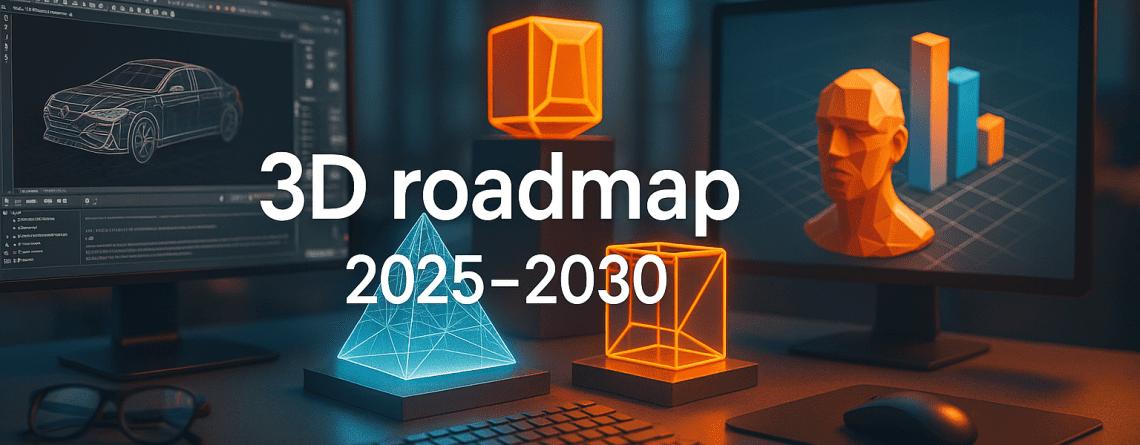
2025 opens a decisive phase for 3D. AI is no longer “new”—it’s a productivity layer that augments human skill. Over the next five years, creators who adopt a hybrid human-AI-automation workflow will ship faster, raise quality, and unlock better opportunities. This is a realistic—and yet positive—guide to thriving.
What truly changes (and what doesn’t)
-
Speed: AI accelerates blocking, retopo, base UVs, look-dev starts, utility rigs, and cleanup. Repetition gets automated.
-
Art direction: still human. Taste, intent, briefs, and iteration with clients remain the differentiators.
-
Final quality: the bar rises. AI helps you reach 80% quickly; the last 20%—polish, narrative, emotion—separates great artists.
Key adaptations for a 3D modeler/animator
-
Practical AI-fluency: orchestrate AI, don’t just prompt it.
-
Concept → proxy meshes for fast composition.
-
Smart retopo/UVs to skip tedium and focus on forms/silhouette.
-
Motion assists: mocap cleanup, in-betweens, physics helpers.
-
-
Pipeline mastery: Git/LFS, USD, Alembic, Python automations, versioning, cloud reviews. People who integrate and deliver without friction are invaluable.
-
Specialize + cross-skill: pick a flagship niche (creatures, hard-surface, stylized, product, archviz) and one secondary strength (lighting, lightweight FX, grooming, real-time).
-
Real-time readiness (RTX/Unreal/Unity): previs, cinematics, virtual production, digital twins—optimized assets and animation will be in demand.
-
Presentation quality: flawless turntables, node/breakdown shots, before/after. Portfolios should tell process, not just show renders.
Where the work will be (industrial & creative)
Industrial/technical
-
Manufacturing & CAD: reverse engineering, DFM, simulation-ready models, tight links to 3D printing.
-
Automotive & aerospace: surfacing, technical viz, XR training, plant digital twins.
-
AEC: BIM + 3D vis, clash-viz, real-time walkthroughs.
-
Healthcare: custom prosthetics, surgical guides, medical visualization.
-
Retail/CPG: packaging, retail fixtures, digital-shelf assets, try-on, configurators.
Creative/media
-
Cinematics & advertising in real time.
-
Games: pipeline optimization and live-ops content.
-
Brand content: photoreal product 3D, premium UGC-style visuals, virtual staging.
-
Education/e-learning: interactive 3D visualization.
3D printing: from prototypes to hybrid business
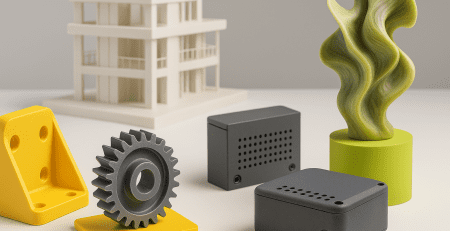
Expect more short-run, customized production (spares, jigs/fixtures, premium merch), better materials and finishes, and smoother bridges between digital and physical. Model for print (tolerances, wall thickness, supports), plan batching, and texture for post-processing. Pair modeling skills with local services (prototyping, replacement parts, small product runs) for immediate revenue.
Personal strategy (2025–2030)
-
Learn one pipeline upgrade per quarter (Python basics, USD, automated bakes/publish).
-
Build productized assets (kits, brushes, grooms, utility rigs, shader templates).
-
Keep a living portfolio: three “hero” case studies updated yearly, highlighting business impact (time saved, sales, conversion).
-
Grow a personal brand: short devlogs, reels with breakdowns, behind-the-scenes.
-
Mental health & community: share WIPs, request peer review—community multiplies motivation.
Bottom line: AI won’t replace your eye, story, or taste—it removes friction so you can create more and better. If you embrace hybrid workflows, master pipeline, and present clear value, 2025–2030 can be your best chapter.


Leave a Reply